
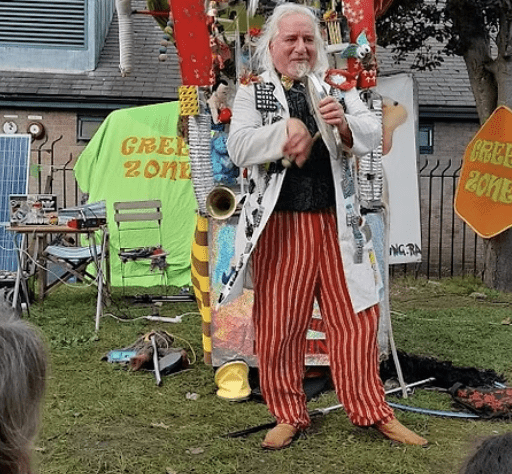
A Kingston artist has been using discarded televisions and broken furniture to redefine how the local community understands waste. Led by Des Kay, founder of Save the World Club, the space has evolved into a creative hub where recycling becomes a performance, and a place to gather in their kitchen and events.
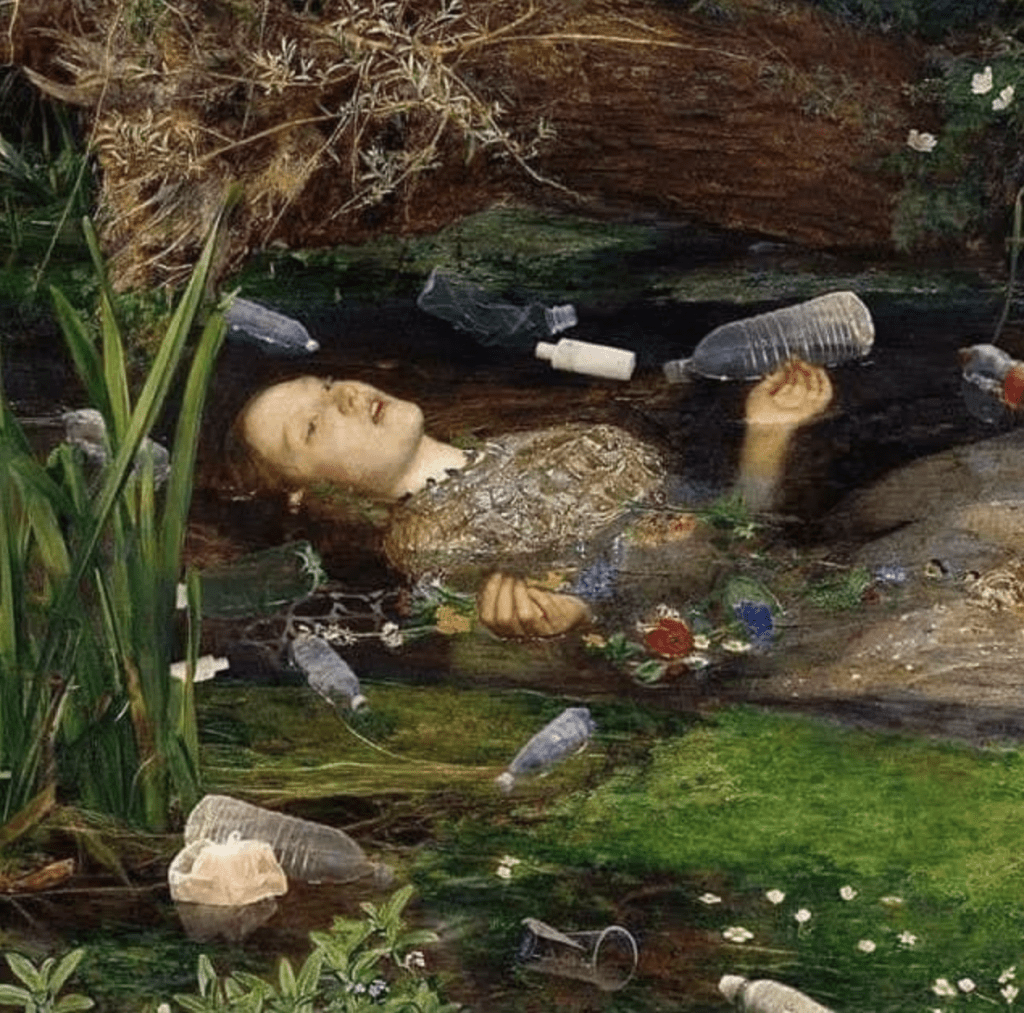
Founded in 1985, Kay’s journey has been driven by concerns over environmental damage at Glastonbury Festival, where he and his team continue to attend and collaborate with artists and the community.
“I’d like people to feel that they are not useless, that they can actually be part of doing something,” he said. “Just a small addition to what’s already happening.”
His music, quirky bicycles, and inventive comedy shows have made him well known and loved in the UK festival scene.
He has performed at Glastonbury every year since 2014 and is featured in Lily Allen’s video, “As long as I got you,” as his Mister Green persona.
Over four decades later, that ethos is physically embodied in the club’s Kingston warehouse, which operates simultaneously as a recycling centre, art studio, music space and community kitchen, right next to the John Galsworthy building at Kingston University.
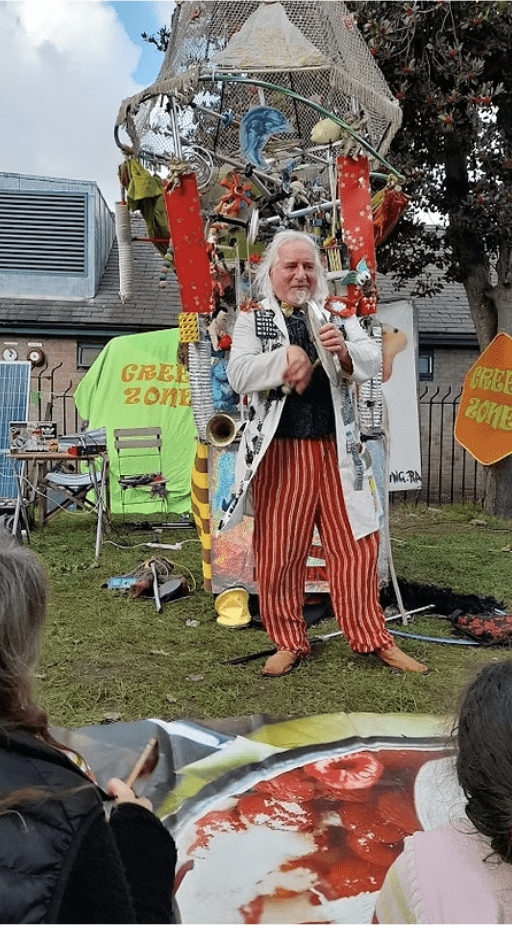
One of his most notable creations features a bicycle-powered puppet theatre constructed from an abandoned ice cream tricycle rescued from a skip. As he pedals, belts and pulleys animate handmade puppets in a 40-minute environmental performance as Professor Kayoss.
“I can say that everything I do is a load of rubbish,” Kay says. “But it is rubbish, and it’s made from rubbish.”
Over the years, the organisation has contributed to public mosaic projects across Kingston, created from reclaimed materials and delivered in collaboration with local residents and mosaic artist Kim Porrelli:, “Rather than it being a dark, unloved corridor, it’s now a place that people want to come to, and that’s amazing.”
The warehouse itself functions as what regular visitors call a “treasure cave,” a space where reclaimed materials are stored, sorted, and repurposed.
The site regularly hosts exhibitions, film shoots, and independent creative projects. In addition to visual art, the space has a recording studio developed collaboratively.
Students from Kingston University and local artists are encouraged to build projects from scratch using salvaged wood, steel sheets, textiles, and furniture. Musicians can rehearse at Connect Studio and produce work affordably, reinforcing the club’s commitment to accessible creativity.
After more than 15 years of struggling to secure stable premises, the current warehouse space enabled the project to expand significantly. While visitors browse recycled clothes and low cost furniture, world food is often prepared and shared.
Des Kay maintains that the project’s message is ultimately about empowerment. “Don’t give up,” he says. “There are difficulties, but people care. Most people are empathetic. They don’t like to see others suffer.”